Can Vitamins Be Measured in Menstrual Blood? Findings From Our First Published Study
We throw it away every month, but menstrual blood is far from biological waste. In recent years, researchers have discovered that it contains information about both the body’s overall health and what’s happening inside the uterus. Studies have shown that menstrual fluid carries many of the same markers found in regular blood, as well as unique signals from uterine tissue itself (Yang et al., 2012; van der Molen et al., 2016; Naseri et al., 2019; Naseri et al., 2024). Building on this growing body of work, we wanted to take the idea a step further and ask a new question: could vitamins — key indicators of nutritional and metabolic health — also be measured reliably in menstrual blood?
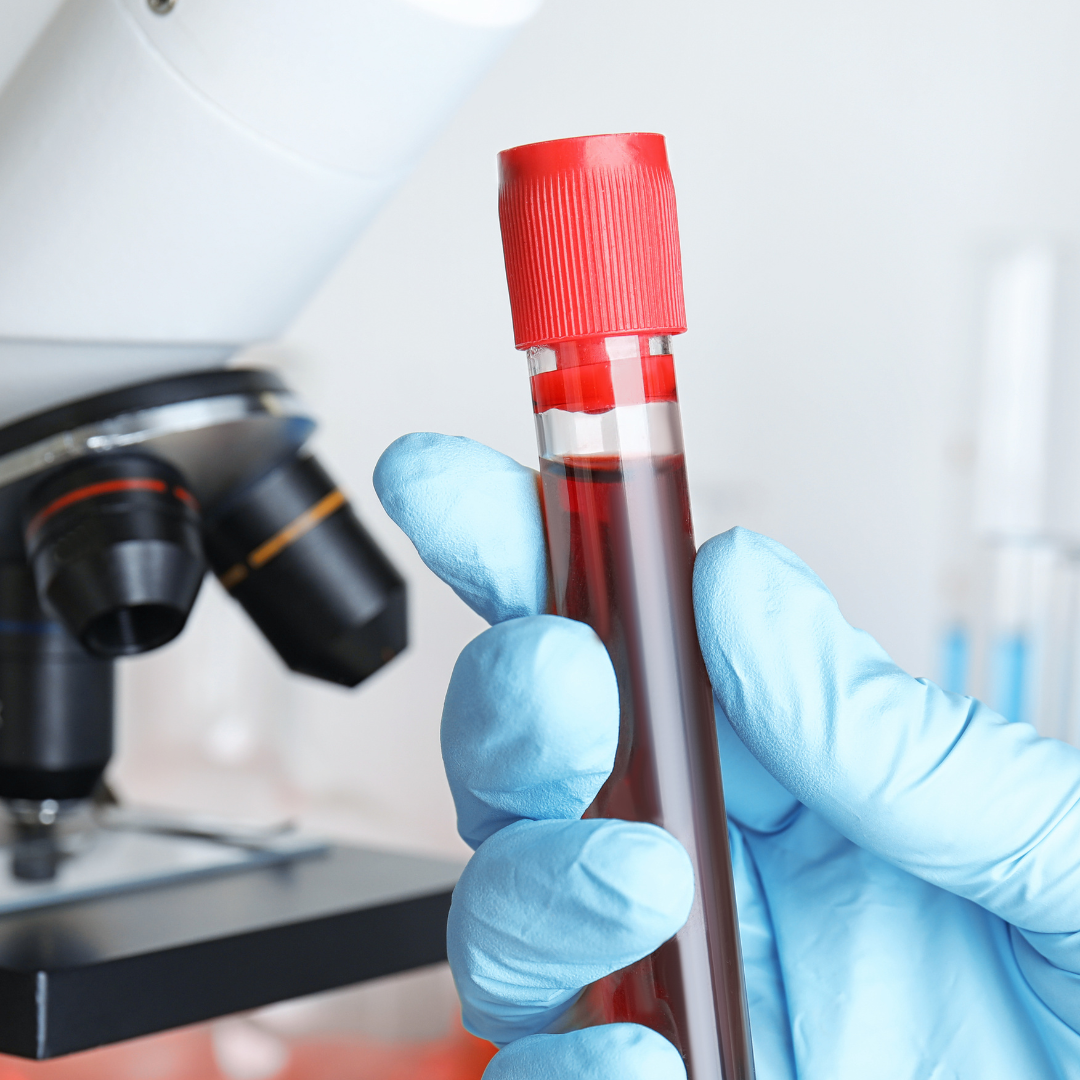
To find out, we conducted our first clinical study in 2023, in collaboration with the University of Rostock, and published the results in the peer-reviewed Journal of Clinical Medicine in December 2024 (Whitbread et al.). Thirty participants with regular menstrual cycles took part, each providing both menstrual blood (collected using a menstrual cup) and a finger-prick blood sample. Both types of samples were processed as dried blood spots, a common format for laboratory analysis. We then compared concentrations of vitamin A, vitamin D, and haemoglobin across the two sample types.
The results were encouraging. Vitamin A showed a strong correlation between menstrual and capillary blood (r = 0.77, p < 0.001), while vitamin D also correlated well, though slightly less strongly (r = 0.66, p < 0.001). This provided the first evidence that menstrual blood can be used to assess vitamin status with a degree of reliability comparable to finger-prick blood. Haemoglobin, however, told a different story. Levels in menstrual blood were consistently lower and showed poor correlation with finger-prick samples, reflecting the fact that menstrual fluid contains not only blood but also tissue and secretions that dilute certain markers.
For us as a company, this study was an important proof-of-concept. It demonstrated that menstrual blood can be processed in a standard clinical laboratory and yield scientifically meaningful results. More importantly, it gave us the confidence to pursue our long-term vision: developing a menstrual blood test that people can use as part of routine healthcare. This first step showed us which biomarkers are promising, which need more work, and how we should design the validation studies that will eventually bring such a product to market.
For women’s health, the implications are significant. Vitamins play essential roles in immunity, bone strength, fertility, and overall well-being. A non-invasive, accessible way to monitor vitamin levels could lower barriers to testing and help people identify deficiencies earlier. While this first study was small in scale, it provides a foundation for future research and development toward menstrual-blood-based health checks.
Since completing this work, we’ve moved on to larger studies, looking not just at vitamins but also hormones, HbA1c, and other routine biomarkers. Our aim is to build on these first results and move steadily toward validated, accredited tests that make menstrual blood a meaningful part of routine healthcare.
A huge thank-you goes to everyone who took part in this first study, as well as to our collaborators at the University of Rostock. Without your contributions, this important first step would not have been possible.
💡 Curious to read the full study? You can find it here: Whitbread et al., 2024, Journal of Clinical Medicine
References
Yang, H., Zhou, B., Prinz, M., & Siegel, D. (2012). Proteomic analysis of menstrual blood. Molecular & cellular proteomics : MCP, 11(10), 1024–1035. https://doi.org/10.1074/mcp.M112.018390
van der Molen, R. G., Schutten, J. H., van Cranenbroek, B., ter Meer, M., Donckers, J., Scholten, R. R., van der Heijden, O. W., Spaanderman, M. E., & Joosten, I. (2014). Menstrual blood closely resembles the uterine immune micro-environment and is clearly distinct from peripheral blood. Human reproduction (Oxford, England), 29(2), 303–314. https://doi.org/10.1093/humrep/det398
Naseri, S., Lerma, K., & Blumenthal, P.D. (2019). Comparative assessment of serum versus menstrual blood for diagnostic purposes: A pilot study. Journal of Clinical Laboratory Medicine, 4, 10–16966. dx.doi.org/10.16966/2572-9578.130
Naseri S., Avrutsky M.I., Capati C., Desai K., Alvero R., & Blumenthal P.D. (2024) Concordance of Hemoglobin A1c and Reproductive Hormone Levels in Menstrual and Venous Blood. FS Rep, 5:33–39. doi: 10.1016/j.xfre.2023.11.009
Whitbread, A. L., Mittelmeier, L., Rao, R. P., Mittelmeier, W., & Osmanski-Zenk, K. (2024). Menstrual Blood as a Non-Invasive Alternative for Monitoring Vitamin Levels. Journal of Clinical Medicine, 13(23), 7212. https://doi.org/10.3390/jcm13237212