
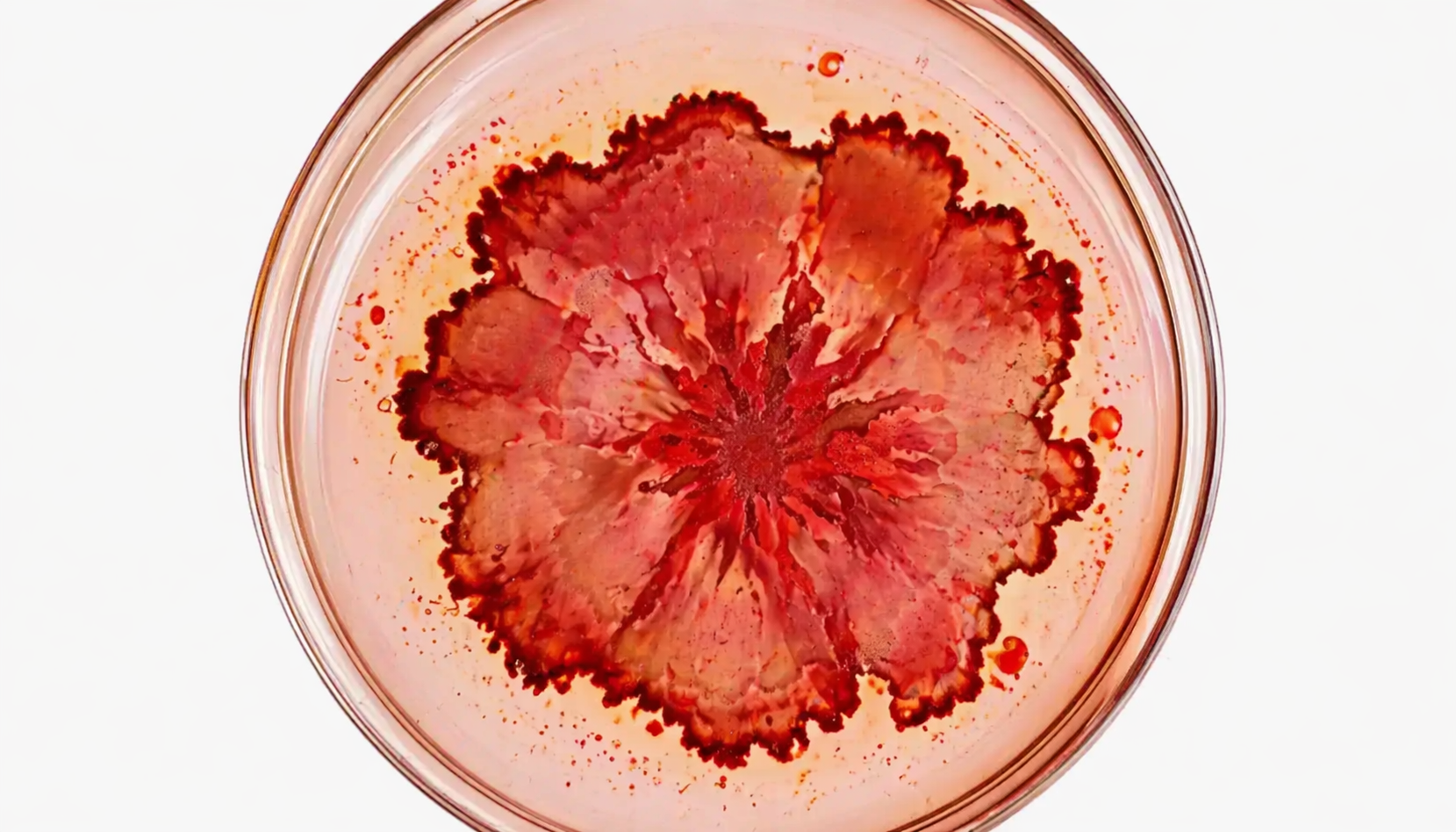
Period blood 101
Period blood 101
At any given moment, an estimated 300,000,000 women worldwide are menstruating.
And yet, most of what this biological signal reveals about the body has remained unread.
-
You shed a biological fluid every month on average 30–80 mL per cycle containing millions of cells, thousands of biomolecules, and over 385 distinct proteins, many of which are not captured in standard venous blood tests.
Menstrual blood is the core of a recurring, tissue-specific biological signal, originating directly from your uterus. -
Once a month, your body releases what we simply call “blood.” But period blood is not just blood. It is a complex mixture of blood, endometrial tissue, immune cells, cervical fluid, and microbiota shaped by hormonal changes and immune activity across your cycle. In total, it carries millions of cells and hundreds of protein signals, reflecting what has been happening inside your body over the past weeks. And yet, despite its richness, it has largely been ignored.
-
That’s the misconception.
We’ve been taught to think of menstruation as something the body gets rid of. But biologically, it is the result of one of the most dynamic regenerative processes in the human body.
Each cycle, your body builds the endometrium, a tissue layer that can grow several millimeters thick. If no pregnancy occurs, this tissue is broken down and shed through a coordinated process involving hormones, immune activation, and vascular remodeling.
What you see is not just blood loss. It is tissue breakdown, repair signals, and biological information combined into one measurable output.
-
You probably remember that blood circulates through your entire body. But period blood doesn’t originate from your general circulation like a typical blood draw.
It comes directly from the uterus.
More specifically, from the endometrium—the inner lining that responds to hormonal signals every cycle. This tissue is constantly building, transforming, and shedding. When it sheds, it releases a mixture of cellular material and molecular signals that reflect what has been happening locally.
In other words, period blood is not a diluted signal.
It is a localized readout of uterine biology. -
Almost everything that makes it biologically valuable:
Hormones linked to reproductive and endocrine health
Immune cells involved in tissue breakdown and repair
Cytokines signaling inflammation and healing
Endometrial tissue fragments
Microbial signatures
Hundreds of proteins (including 385 distinct proteins)
Many of these components are locally enriched, meaning they are present in different concentrations than in venous blood.
-
We are only beginning to understand its full potential.
Early research suggests that period blood can provide insight into:
inflammatory patterns
hormonal balance
reproductive health
cycle dynamics over time
And because it is collected monthly, it offers something traditional diagnostics cannot:
→ 12 longitudinal data points per year
Not just a snapshot,
but a timeline of your biology. -
Period blood challenges how we think about diagnostics.
What was once dismissed as waste
is actually:→ a recurring biological dataset
→ a non-invasive access point
→ a new layer of health informationIt reframes the body from something we test occasionally
to something we can understand continuously.
